Not successful, not celebrated, not pleasant

Reading Sergio Luzzatto’s The First Fascist: The Life and Legacy of the Marquis de Morès for the Spectator, 30 January 2026

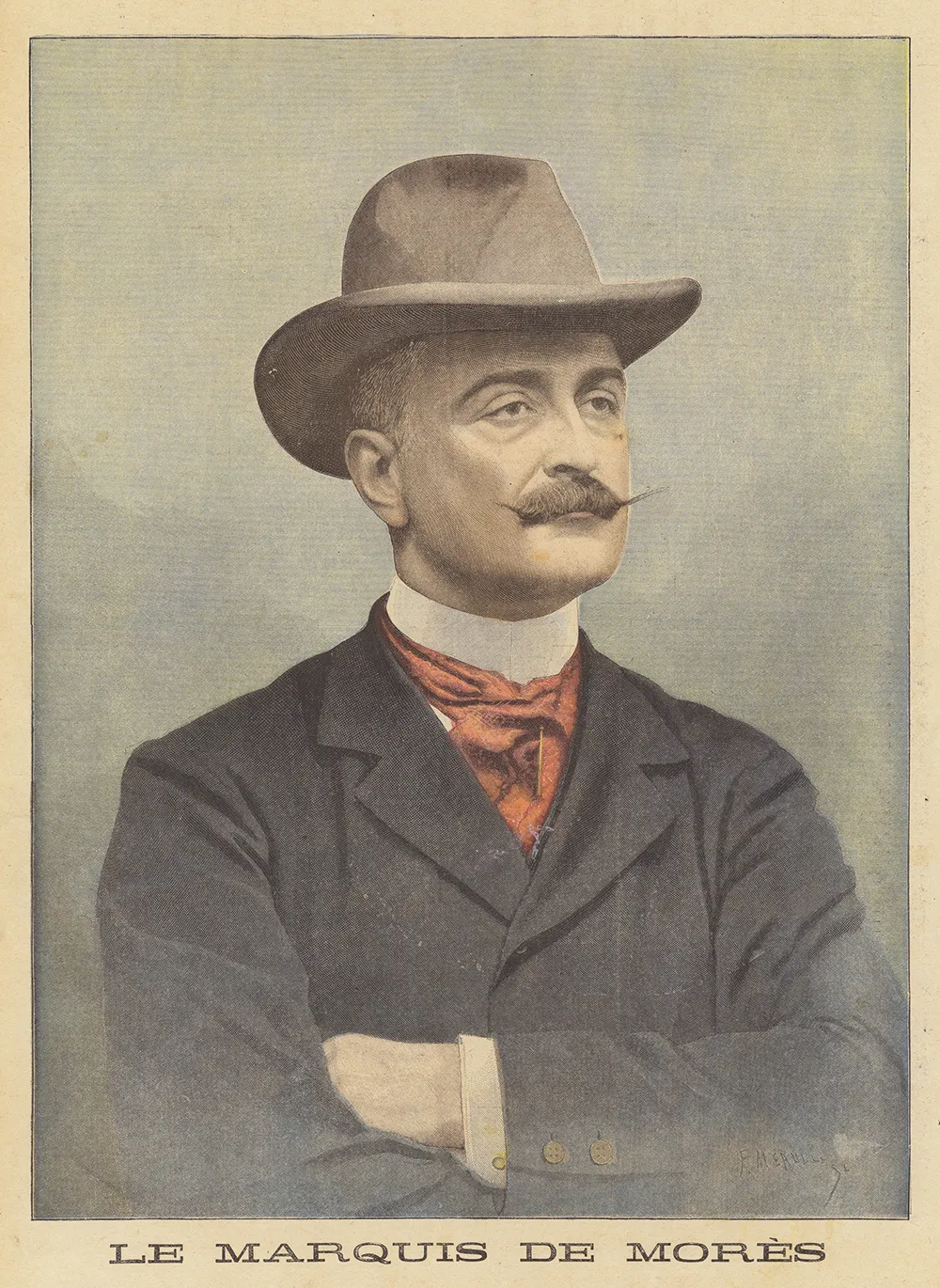
The Marquis de Morès was a man of many abilities, but balancing a cheque-book was not one of them. Bested (savaged, frankly) by the Chicago meat-packing lobby, frustrated in his attempt to build a railroad across Indochina, the French soldier, duellist and self-styled “economist” returned home in 1886, caused absolute havoc, and invented fascism (if we let the author have his way) — only to meet nemeses much closer to home. His father-in-law went to court to seperate his daughter’s finances from those of her husband; a family council took charge of Mores’s money; at last it came out that this tireless scourge of Jewish usury had borrowed from lobbyist and conman Cornelius Herz, one of the leading (and Jewish) players in the Panama scandal. Publicly embarrassed, Morès took himself off to Algeria and set about planting an unsanctioned French flag further and further into the Sahara, where he and his small party came to grief at last, massacred by local tribesmen.

It was the Jews what really done it, or so his admirers claimed, just as it was Jews had blighted Morès’s innovative bid to transport already slaughtered beef cattle, rather than live ones, across the Mid-West.

Butchers in New York and Paris, bankers, politicians, officers in the French army (this book reaches its climax, and Morès his nadir, amidst the Dreyfuss affair) — if they were Jews, you can be sure they were out to get him.

Italian historian Sergio Luzzatto assembles historical vistas in pointilliste style, through the details of lives of carefully selected individuals. This is not so much Carlyle’s “great man” theory as “A History of Europe in 100 Foibles”. With Mussolini and Primo Levi hanging off his belt, Luzzatto now turns to Morès — and what a peculiar choice he is: not a thinker, not an intellectual, not a writer, not a “creative” of any sort, not successful, not celebrated, and, to top it all, not pleasant.

More timid intellects might trace the roots of Europe’s far right to syndicalism, corporatism, anticapitalism and medievalism. Luzzatto turns his back entirely on the sort of history that would turn politics into a sort of bloodless debating club, and goes for the jugular. The far right makes no sense without antisemitism; and Luzzatto lays out the accidents, contingencies and affordances that have baked antisemitism into any and every attempt to unweave time and undream the market-driven world.

The First Fascist is a book that shines more in retrospect than in the act of reading: a book of minutiae that, once ingested, may change your view of fin de siecle history.

Napoléon III’s disastrous six-week war against Prussia in 1870 sent the French government lurching from one crisis to another. There were so many different factions in its Chamber of Deputies, all governments ended up being coalitions, and it was quite usual to find a new government boasting nearly all the same ministers as the previous one. Extremist factions of wildly different stripes agreed on this: there had to be a more direct and visceral connection between the state and its people.

Morès was one of several who threw their hat into that particular ring. (A butterfly flaps its wings, and Luzzatto finds himself writing about Boulanger, or Barrès, or Déroulède, or Delahaye). Was Morès the single pivot on which European history turned? Luzzatto is too measured to claim anything so crass.

But I’m not, and here’s the Hollywood version: Mores’s nationalist-sociaist ideology — a synthesis of vigilante violence, anti-capitalist populism, and the cult of the “strong man” — did not form in the salons of Paris, but in the slaughterhouses of Medora, North Dakota. He backed to the hilt (and damn-near into prison) the Montana Stranglers’ ruthless killing of cattle rustlers. Technically, this was murder. Practically, it was the removal of murderers and very useful to mankind (and don’t take my word for it, that’s Morès’s neighbour Teddy Rooseveldt speaking). Morès viewed the badlands as a space to resurrect a feudal order where he was the lord, the cowboys were his serfs, and the law was irrelevant.

Bringing the “cowboy style” to the refined streets of Paris (down to the revolver and the hat), Morès tried to recreate the Montana Stranglers in Paris using newsboys and butchers…

Ah, but here, sad to say, the wheels of our gay little cart come flying off, because, as Luzzatto himself observes, although Morès brought an distinctly American sensationalism to French politics, and surrounded himself with butchers and newsboys, this Chicago-hardened populist thug ”seemed disinclined to organise them into real squads with any real purpose of action — into a kind of paramilitary that could be deployed in the streets to exercise a systemic use of force.”

One can only deplore the way Luzzatto lets the air out of his tyres in service of the truth — does he not want to shift copies? But one can only admire his rejection of “intellectual history” in favour of the real thing: a history composed of actions (inescapably bloody) and consequences (irretrievably dismal).

A speculative fiction on a meaningless condition

Talking to Pierre Huyghe for the Financial Times, 10 January 2026

“I don’t care what you say about these quantum technologies,” the French conceptual artist Pierre Huyghe told Berlin-based curator Bettina Kames, “I don’t buy it.”

Quantum sensors and quantum computers exploit the blurriness of the world at the smallest achievable scale, where, among other oddities, unobserved particles may share properties and occupy more than one position at once. By exploring many possibilities in tandem, they can perform calculations and take measurements that are otherwise fundamentally impossible. With them we’ll revolutionise drug discovery, secure global communications, understand the climate and accelerate artificial intelligence.

But what use is all that to an artist? “People are usually fascinated and intrigued by this field,” says Kames, the co-founder of LAS Art Foundation in Berlin, a roving gallery of future-facing, interdisciplinary work. Kames was out to commission a piece on the quantum realm but found Huyghe “quite critical.”

“Quantum science and technology is a battlefield,” Huyghe tells me from his studio in Santiago, Chile. He says this with some relish: whatever his artistic reservations, there’s no denying his appetite for a field notorious for its “weirdness”. “Everything about it gets cast as analogy and metaphor because the researchers are still having a hard time putting their achievements into words and formulas. There is some agreement, but also a lot of argument.

The problem, I suggest to the quantum physicist Tommaso Calarco — architect of the European Union’s quantum strategy, and collaborator on Huyghe’s latest artwork — is that we can’t simply point to the odd things happening at such a tiny scale. The quantum realm involves structures smaller than the wavelength of light, so there’s no way we can actually experience them with our senses.

Only it turns out — as Calarco explains with a grin — that we can.

An atom throws off a photon whenever one of its electrons jumps with seeming randomness from one orbit to another; the human eye is sensitive enough to detect this constant flickering. “It’s the only time in your life you will ever see an effect without a cause.”

Back in the lab, Calarco’s job is to protect the parts of quantum computers from this sort of interference. He wondered how you could visualise working, not just with one atom, but with dozens arranged in a lattice, as in a quantum computer. “I had no idea Bettina had Pierre Huyghe on her list of potential collaborators. When I heard, I said: I’m catching the first plane to Chile.”

In Paris in 2013, Calarco, at a loose end, had wandered into Huyghe’s retrospective at the Centre Pompidou. “I was blown away by the depth of each piece, by their variety, by their overarching coherence.” Huyghe had retained the walls and labels from the previous exhibition (a retrospective of artist Mike Kelley), arranging his work so that new art appeared to grow out of the decay of the old. One piece, Zoodram, featured a hermit crab living inside a bronze replica of Brancusi’s Sleeping Muse. Rather than have a museum display his art, Huyghe’s art had taken over the museum. “It was overwhelming.”

Kames set up a Zoom call between the pair, and witnessed their instant connection. Huyghe talks now about Calarco’s “beautiful mind”; Calarco talks about Huyghe’s “genius”.

The proof will be in the piece, a large-scale installation dominated by a “monstrous unthinkable” — the faceless protagonist of an enormous hour-long, 9X9-metre film.

In Halle am Berghain, a vast industrial space adjoining the notorious Berlin nightclub, quantum properties will be transposed into sensory information, encompassing sound, vibration, dust, and light. “Pierre embraced the idea of using the quantum computer as an actual instrument,” Calarco explains. “We pluck the machine like a string.” The “string” here is the energy field between atoms. Pulling atoms away from each other yields a reverberation that can be picked up by an electrical circuit.

“For the first time, we’ll hear the sound of a quantum computer,” Calarco says. “It’s one of the biggest achievements of my career.”

“Liminals” is merely the latest stop on Huyghe’s magical mystery tour of a charming but indifferent cosmos. For Huyghe, fiction is the lens through which we see reality most clearly — that idea has provided the artist with rich pickings throughout his career. Take 2002’s “L’Expédition Scintillante”, the fictional tale of an expedition to Antarctica, told through an epic exhibition comprising indoor fog, a melting ice ship, and a twirling ice skater.

Other pieces have been artfully daft. In 1999, Huyghe and frequent collaborator Philippe Parreno purchased the rights from a Japanese design compay to AnnLee, a wide-eyed purple-haired female manga character, for a few hundred dollars. They then handed over the avatar to other artists to use in any way they wished, creating animations in which AnnLee wanders a lunar landscape, or recites Philip K Dick’s Do Androids Dream of Electric Sheep? Finally in 2002 AnnLee was “terminated”, buried in a coffin constructed out of parts from Ikea’s Billy bookcase.

In the last decade or so, Huyghe has been less interested in creating fictions; now his artworks pretty much force you to make up stories of your own.[are there quotes from Huyghe we can bring into this section or around it, just to bring his voice more into this biographical bit?] “We construct fiction to turn chaos into cosmos. Fiction is our tool to survive,” he says. “Without it, we would be confronted with the reign of contingency. The world would be quite literally unthinkable. Fiction is a mask we put on everything, but at the same time it’s the lens bringing to world into focus.”

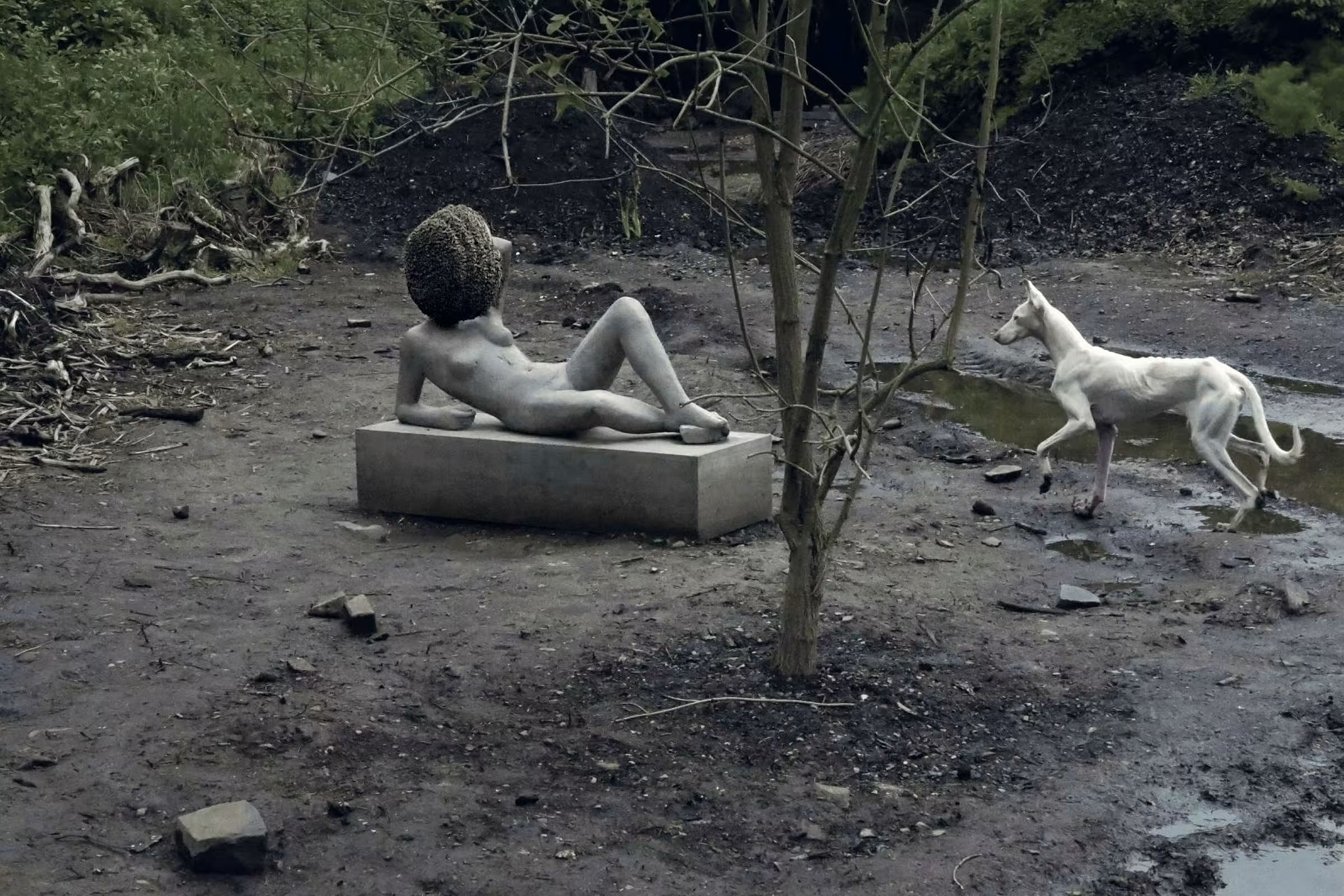
At the Documenta 13 exhibition in 2012, in Kassel, Germany, he created “Untilled”, a “live construct ecosystem” in a compost heap, populating it with ant nests, psychotropic plants, a sculpture of a nude woman with a live beehive for a head, and an albino dog with a pink leg named “Human” that roamed the installation. The idea behind “Untilled” was to create an artwork that possessed a life of its own, separate from human attention.

Huyghe has been refining this proposition ever since. For 2018’s Uumwelt at London’s Serpentine Gallery he collaborated with informatician Yukiyasu Kamitani at Kyoto University, Japan, to look into our minds. Images conjured to mind by volunteers in MRI scanners were used to train learning models, and these models then tried to interpret what a diffferent set of volunteers were thinking about. Keeping up with the blizzard of disjointed, surreal images spilling from five huge screens forced viewers into an hallucinatory state. People stumbled out convinced they’d seen something. No one could agree what it was.

Huyghe’s 2014’s film “Untitled (Human Mask)” features a masked monkey, dressed as a young girl and trained as a waiter, tootling about an abandoned cafe. It is Huyghe’s most celebrated piece, and also the most misrepresented. Yes, it’s “about” being unaware of the role one plays in the world. But it’s much more a trap for the viewer: you can’t help but read human intentionality into what that monkey’s up to. You can’t help but make up stories.

“I think we are deeply chimeric and deeply monstrous and we’re made out of bits of mask. That is what I was trying to say,” Huyghe explains. “But it’s not a discovery that should be depressing! There’s joy to be had in being artificial.” Artifice is our species’ special talent, after all: “Was it Mallarmé called us ‘feux d’artifice’ — fireworks?.”

There’s no getting at the real; the trick is to find joy in the attempt.

In an enormous industrial space that resounds to the twanging of quantum-scale strings — a cacophony of causes without effects — Huyghe’s gigantic filmic protagonist tries to know itself. This generated figure, says Huyghe, is “a speculative fiction on a meaningless condition — a human-like membrane inseparable from the environment it is in.”

A modish idea? Perhaps: but it’s bread and butter to the physicist Tommaso Calarco. You look into the quantum realm and you see a world that doesn’t need you. So you try to understand it. You tell stories about it, come up with analogies, metaphors. You engage with it, “and you feel alive. You wake to your own agency, your own consciousness,” Calarco says. It’s what made him such an admirer of Huyghe’s art. “The work doesn’t try to sell you anything. It doesn’t need your attention. It interests you, and you make it yours.”

Superficially efficient and fundamentally amoral

Reading The Score by C Thi Nguyen for the Telegraph, 2 January 2026

In the Domesday Book of 1086, C Thi Nguyen tells us, English surveyors measured land by the “hide”: the area an average family needed to sustain themselves. A useful measure, obviously; but you need local knowledge to use it. Some places are more productive than others. So how much land, exactly, would the average English family need? It could be 40 acres, or 60, or 120.

If decisions are taken locally, there’s little issue. But as soon as authority begins to centralise, units such as the “hide” disappear, replaced by standardised measures that are easier to record and act upon. Local knowledge becomes forgotten. The more centralisation advances – and in our modern age, it has only advanced – the greater the problem grows.

The Score is part-polemic and part-philosophical inquiry. Nguyen’s argument, in essence, is that in an effort to be objective and unprejudiced, our governments have turned metrics into targets, and built rules around them. The result: our civic life has become a superficially efficient but fundamentally amoral – not to mention inescapable – game. Nguyen himself is a philosopher, but also a lover of board games, video games, technical climbing and yo-yoing: in other words, he understands the utility of rules. But, he writes, in the desire to make life ever more frictionless and reasonable, we’ve let metrics twist our values.

Skateboarders can spend an afternoon competing to come up with the coolest tricks, and go home satisfied without ever having had to definitively settle on who actually won. In formal skateboarding competitions, though, nature of the activity changes: aesthetic elements are discarded in favour of clearer, more quantifiable goals, such as jump height and number of spins. As with sports, so with the Church: Nguyen mentions a pastor who, instructed to meet a baptism quota, finds himself ignoring the pastoral needs of the rest of his flock. And Academia, to no-one’s ggreat surprise, is far from immune. Nguyen argues that the U.S. News & World Report’s university rankings have suppressed diversity because prospective students now outsource their reasoning to the U.S. News algorithm. Do you want to fight for social justice, or make a killing on Wall Street? Either way, you’ll apply to the same law school — the one at the top of the list.

The dean and the pastor and even the professional skateboarder at least work in settings where these problems can be aired. For the rest of us, fixated on their annual targets at work, the number of likes on their social media, and the number of steps recorded on their fitness doo-dad , the external metrics work beneath their notice to replace their original values. I have a thousand friends and took ten thousand steps today — that makes me healthy and popular!

More ominous examples follow. There is, for example, a US Department of State metric called TIPS, which measures the effectiveness of policies to reduce modern slavery, and sex trafficking in particular. We know that slavery flourishes in areas of extreme poverty. But if a country reduces its ambient poverty and as a result reduces sex trafficking, the TIPS report’s metrics indicate failure – because the conviction numbers drop off. As Nguyen explains, the metric only “incentivises countries to keep sex trafficking around so that there will be plenty of traffickers to convict.”

Nguyen’s most profound insight lies in plain sight: to quote Wordsworth, “our meddling intellect misshapes the beauteous forms of things”. Games do exactly that, and offer a refreshing refuge–for a few minutes or a few hours–from the ambiguities of the real world. The gamification of real life, on the other hand, traps us all, with no prospect of ending.
So how do we escape a gamified world? Read more books! Take up the violin! Stick it to The Man wherever you can! This doesn’t sound like much of a call to revolution to me, and I’m not sure Nguyen’s heart is in the fight. Individuals may recover their individual agency, and this book will help them do so, but it’s hard to see why businesses, governments and bureaucracies of all stripes would ever abandon their self-empowering rhetoric of “objective” metrics.

Early on, Nguyen says: “I had an entire theory about games, in which clear and simple scoring systems were the magic ingredient that opened the door to a whole world of delightful play. And I had an entire theory about metrics, in which clear and simple scoring systems killed what really mattered.” This is well put, but if I had a criticism of this otherwise trenchant and entertaining book, it’s that Nguyen follows the rules of his genre so very closely. Like every “popular thinker” on the shelf, he can’t resist sharing with us his personal journey to enlightenment. If you’ve ever read The Hungry Caterpillar to children, you’ll know how much young readers delight in repetition. Nguyen, to me, is the Eric Carle of philosophy. If you’re even roughly up to speed with his topic, his steady circumspection may prove exasperating.
But don’t discard him. A book, too, is a kind of game, in which “we adopt a goal in order to get the struggle that we really want.” It’s about going the long way, a particular way, using a particular method. If we truly want to understand our civic plight – and not just tick off some talking points – then we should read The Score. We’ll find that Nguyen has planned this particular long way round with skill.

Lumpen corpses and lustful hyena-women

Reading Killing the Dead by John Blair for the Telegraph, 13 November 2025

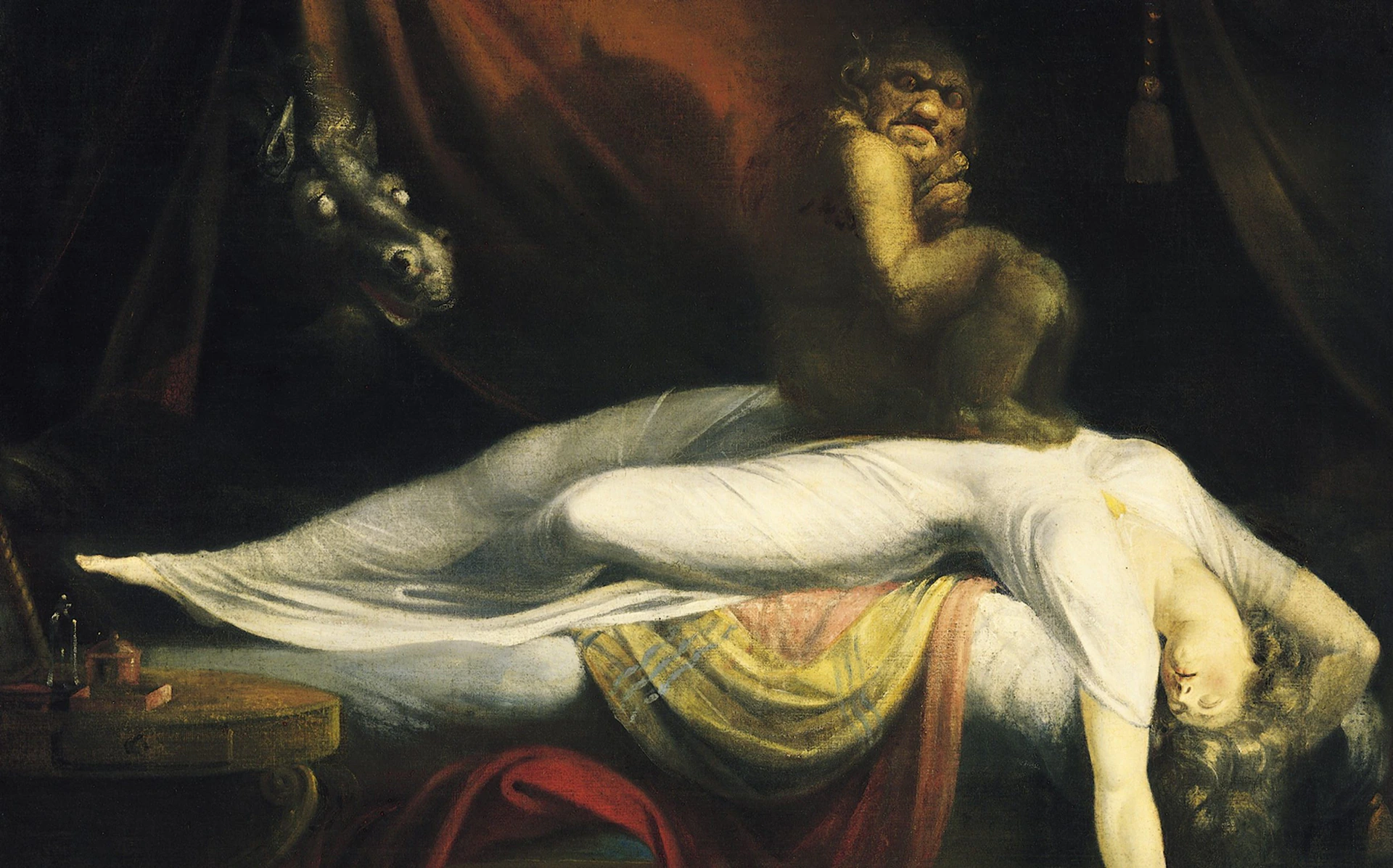
St Cuthbert lived on the island of Lindisfarne on a diet of raw onions and died (with what sense of relief we can only imagine) in 687 CE. Four centuries later his coffin was opened, and his revealed corpse looked for all the world like a living man. Some duly proclaimed a miracle, but archaeologist and medievalist John Blair can’t help wondering: “Might his lifelike corpse have raised concerns?”

Comprehensively surveying the world’s undead was, Blair says, a project he saved for his retirement. Killing the Dead speaks to a lifetime’s storing up of mischievous treasures; also to Blair’s sheer enjoyment now, that teeters often (and who can blame him?) on unholy glee. What’s not to love about discussions of China’s “lumpen corpses and lustful hyena-women”, or about a book with chapter titles like “Lying Undead in a Ditch: England, 700–1000”?

Dullards will call “cheat”, since the title mentions vampires while the book embraces all varieties of the undead. But be patient: Blair’s global history of the dangerous dead (restless dead, undead, revenant shroud-chewers — call them what you will) is structured to address this very point.

Blair reckons that vampires, commonly conceived, are a literary invention, and comparatively youthful. Our first true vampire novel is a pamphlet from 1600, now lost, featuring the widely florid tale of Johann Kunze of Bennisch.

Everyone knows that vampires are Slavic but, says Blair, “the intensity of a phenomenon at a late date does not prove that it existed from an early one;” also that historical discussions of the phenomenon “have hugely over-emphasized bloodsucking.”

Blair’s history begins around the 8th century BCE with the Neo-Assyrians, whose remarkably laid-back attitudes towards the restless dead found their way to Greece and from there to Rome, where they cross-fertilised with some Asian ideas (“veering between pathos and bawdy comedy”) about predatory female shape-shifters. These folkloric strains twisted and darkened as they head north, giving rise to some magnificent Icelandic monsters.

Scandinavian colonisation cast these “Viking-style revenants” across northern Europe, where they shaped beliefs in northern Germany, Poland, and Bohemia (witness “an intensive corpse-killing epidemic, which erupted during 1546–1553 in a series of small Saxon towns”). This lore then intensified and spread south-eastwards, eventually linking up with more oriental-flavoured Balkan beliefs. So while vampires are younger than we think, there’s no need for disappointment: their ancestry is much richer and more various than we ever could have imagined.

Some huge questions are being begged here, and Blair is assiduous in addressing them all. (Blair’s book’s over 500 pages long, and he wastes not a single one.) First and most important: are the undead a story we tell each other, or a real phenomenon?

For the phenomenon to be real, Granpa doesn’t actually have to leap up from his bier and chase us around the parlour. It would be enough that we shared some cognitive glitch that made us susceptible to belief in the undead. Perhaps we’re all inclined to see signs of life in post-animate matter. And it is true that corpses do not say still, they groan and fart, stiffen and flex and, when they finally decay, do so at rates that are far from normative.

These days we consider death a singular event — ironic, really, given how our medicine repeatedly brings us up against the processes of death. Earlier societies didn’t have quite so much understanding of coma, anoxia, brain death and vegetative states, but they steered much closer to reality (and offered infinitely more comfort to the bereaved) in viewing death as a process, not an event. “The cessation of breath, the laying-out, the liminal stage at the wake, the burial, and the ensuing physical decay are steps along a road that must be followed precisely,” Blair observes of the rites that grow up in these societies — the only wrinkle being, “if that journey is impeded, the implications can be horrifying.”

Except when it wasn’t. After all, the most memorable resurrected body of all belongs to a much-loved and still revered religious visionary who got up and left his tomb after actually dying. Solid enough — an animated corpse if ever there was one — Jesus Christ nevertheless also managed, in true vampiric style, to pass through the stone stoppering his tomb. No wonder some of the first Christians “found the bodily Resurrection problematic”.

Blair is less interested in picking holes in what people saw; he’s more interested in how people interpreted what they saw, and what this says about their ideas of life in general. In Shamanic societies, fluid spirits flow promiscuously in and out of matter: to be animated at all is to be possessed. Christians and Muslims pack the souls of the dead off to various divine resorts, so can only explain reanimation through the mischievous activities of unearthly (presumably devilish) agents.

Generally, though — and with the notable and quite niggling exception of the Resurrection myth — the phenomenon proves too slippery for dogma to easily attach itself: “One event gives rise to multiple folkloric forms,” Blair explains, “which, when reformatted by the observer… take on forms that we may not even recognize as the original event.”

In other words, whatever psychological universals underpin our experiences of the undead, they’re ever so quickly drowed out by all the inventive stories we spin around our experiences. Are the undead psychically real, or are they just an old wives’ tale, endlessly reglossed? The answer, frustrating as this is, is “Yes.”

A more productive question: what summons the undead? They get about a bit, it’s true, but they’re hardly an everyday occurrence. In the book’s single sophomoric moment, Blair says that their appearances are “triggered by attitudes, perceptions, and fears that are not automatic, but spring from social, economic, political, religious, and cultural variables.”

Don’t anyone panic: he’s quick to put flesh on these modish bones. Wars, plagues and religious controversies unsettle us enough that the walls between the living and the dead start to shiver. There’s also the well-documented abuse and tyranny dished out by Slavic matriarchs, right up until the early 20th century, to consider. Deliciously inconvenient, politically speaking, they have also generated the most recent outbreaks. The latest undead-mother-in-law-killing — a proper stake-through-the-heart affair — took place at Vâlcea, Romania, in 2019. Most vampires are a public nuisance, but undead babushkas are worse: they come after their own.

Ultimately (and somewhat incredibly) Blair’s history of the vampire provides inspiration and comfort. Digging up the dead and decapitating them with an iron spade is a gruesome business, for sure, but a sight less disgusting than treating a living human being the same way. Blair argues convincingly that corpse killings are prophylactic against the kind of mass hysterias otherwise burn witches or throw children into ovens. “Like other extreme rituals, it is distressing at the time but leaves people feeling good afterwards,” is Blair’s insouciant conclusion: corpse-killing is “mainstream”.

Blair leads us through innumerable vales of terror and out again, trembling, yet unharmed, and even enlightened, with the elan of Gene Wilder’s Willy Wonka (who, now I come to think of it, was another pretend retiree). No apologies — if I don’t deliver this crushingly obvious paean, who will? — Killing the Dead is a book to die for.

Puffins have the kindest eyes

Watching Ed Sayers’s Super Nature for New Scientist, 29 October 2025

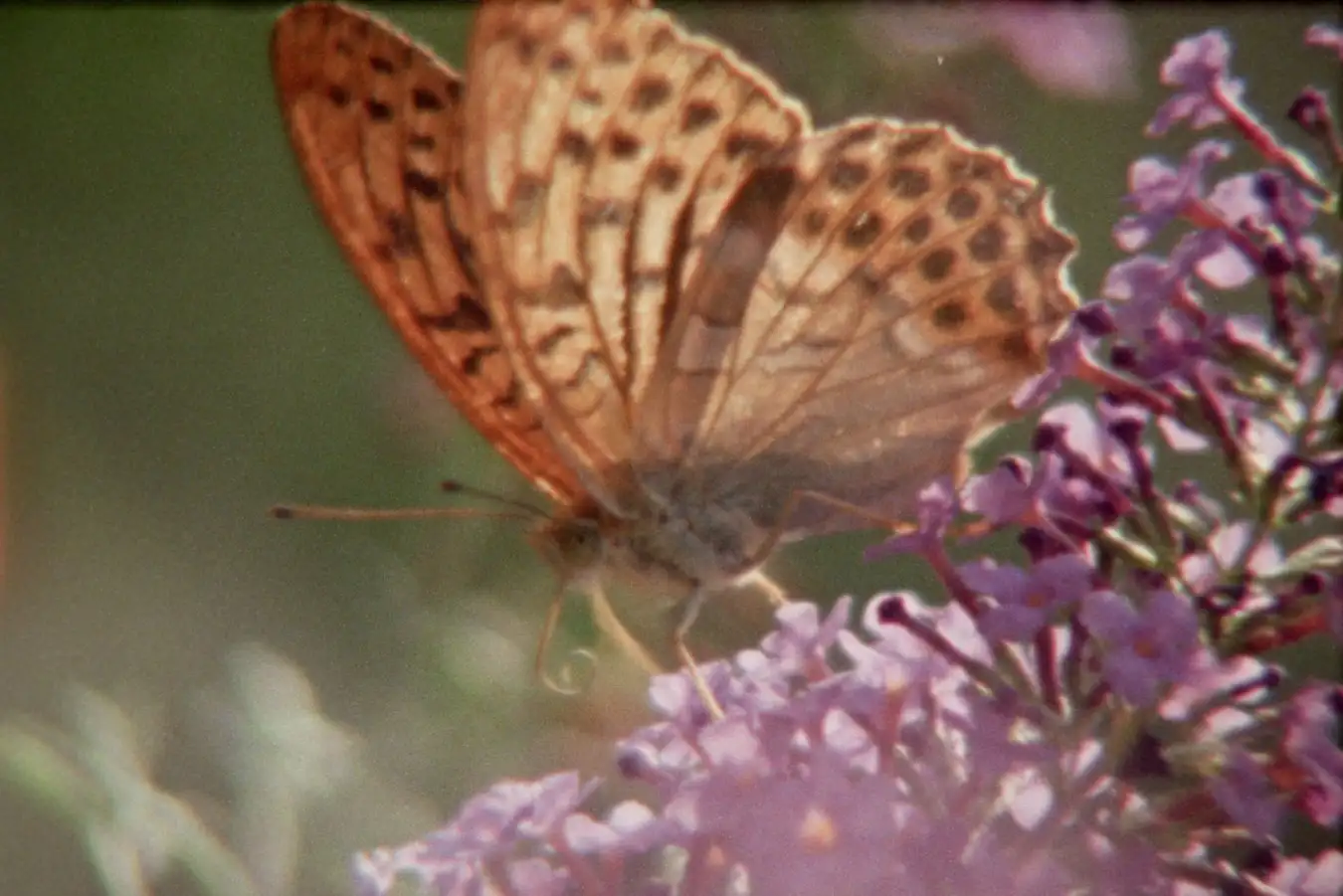
Ed Sayers, a director of commercials and music videos, has a passion for Super-8, a motion-picture film format released in 1965 by Eastman Kodak. He’s not alone — the dinky film cassettes depend for their continued production on the hue, cry and advocacy of a small global community of filmmakers.

What marks Sayers out is his organisational ability. His first feature is assembled from super-8 footage dispatched from 25 countries by forty collaborators. Professional filmmakers and local enthusiasts alike have sent Sayers footage of the natural world near where they live.
Reading the premise of this movie, I’ll admit I was buckling in for 82 minutes of sparrows and house cats, but, boy, was I mistaken.

Though the distributor is making much of the film’s “green” credentials (a globe-spanning documentary that racked up precisely zero air miles), worthiness is not much of a sales pitch.
Better, I would have thought, to emphasise how strange everything looks in this hand-held, lo-fi and mostly silent format. (Super-8 with sound, of a sort, arrived in 1973, but Super Nature’s vivid and engaging soundscape is mostly the work of engineers David McAulay and John Cobban.)

In voice-over, Sayers says Super-8 looks as though “someone had painted your memories for you”. The literal truth of his assertion becomes apparent very early on, as you settle into the medium’s glare, flare, shakiness, and shifts of hue and tone. The world captured by super-8 is closer to the world our eyes actually capture. It’s not polished, posed, well-lit or even perfectly focused, but then, neither is the world. It is, however, often devastatingly beautiful, and so is this film. A few of the more ambitious shots — sones featuring the smallest, fastest, most retiring creatures — are hard to read. But an animal isn’t any less of an animal because we only glimpsed it.

The one sequence that didn’t work for me, though it was beautifully shot and edited, was an aerial sequence featuring migrating geese. The whole set-up, involving microlights and two cameras, was altogether too ingenious, too “staged” (and not altogether “green”, if we want to get persnickerty about it).

Better by far to lie in a puddle in the rain with a plastic bag over your head, filming a snail.
Super Nature is a film about the natural world as people actually experience it. Big budget nature filmmaking takes the diametrically opposite approach, revealing the world as the eye cannot possibly see it, either because it’s physically impossible to see, or because it doesn’t even exist. The impulse to reveal strange new worlds is admirable – I maintain that Walking With Dinosaurs is a joy — but I can’t help but wonder why the viewer, drunk on a surfeit of perfectly lit, perfectly framed, perfectly timed visual wonders, wouldn’t become permanently jaded.

Super Nature shakes us up wonderfully well.

Structually, it’s one of those films that’s constructed around the story of its own making. Accompanying every sequence (flamingo, worm, coral, white rhino, weedy sea dragon, kangeroo…) is a voice-over from the filmmaker, explaining what their footage means to them. There are many charming moments: one filmmaker describes the sound a puffin makes as it runs (clownish, as though it were wearing outsize slippers), and tells us, “They have the kindest eyes”. Some testaments are inspiring: there are filmmakers here who took to Super-8 because they needed a new way of looking at the world, once disease or misfortune had shrunk their lives to a point. Some trot out ecological pieties; others need to stick their heads under the cold tap (in the ibex you can, apparently, see the wisdom of the mountains).

Then there’s the story Ed Sayers tells about himself: a director who sets out with a grand ambition to record the natural world in the greenest manner possible, equipping local filmmakers with vintage technology (Act One); who loses all hope as he finds himself editing footage of floods, fires, Ukrainian trenches and piled plastic garbage (Act Two); but who is ultimately cheered up and his film project redeemed (in Act Three) by the antics of a playful seal. It’s as good a narrative frame as any, I suppose, but perfectly predictable, in a way the footage never is.

“We were obliged to kill them all”

Reading Nick Higham’s Mavericks: Empire, Oil, Revolution and the Forgotten Battle of World War One for the Spectator, 25 October 2025

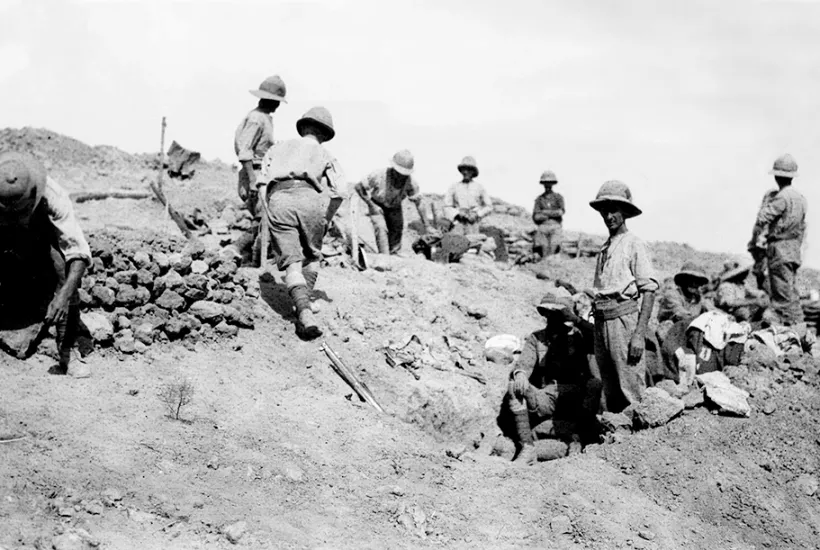
December 1917. For years the Ottoman Turks have been trying to spark a worldwide jihad of the world’s Sunni Muslims, hoping that Muslim subjects of the British empire in India will rise in revolt.

Now that Tsarist power in Russia has collapsed, the roads through central Asia are open, and the war-weary British Empire has virtually no resources left to prevent the Turkish empire from expanding into India.

Edward Noel, An aristocratic Catholic political officer who is supposed to be in Persia, sends a telegram to his betters from Baku, an oil-producing city perched on the western shore of the Caspian Sea. He wants to plug the strategic gap in central Asia by raising a force of local troops. He deems it but an inconvenience that everyone around him is fighting everyone else to the point of pogrom.

Single-handedly reshaping the geopolitics of the Caspian Sea lands Noel into a world of trouble. Captured by Persian rebels, he is falsely accused of organising a massacre of Muslims, is tied to a tree, and faces a firing squad. He won’t confess, and at the last minute, a messenger arrives with a stay of execution.

Now Even Noel, “brave to the point of recklessness,” gets the message, and he slips away in the middle of the night, forcing his way through ten miles of dense, thorny, and waterlogged forest until his legs became a “bleeding pulp”. After 24 hours of continuous marching, he is recaptured, flogged, and kept in heavy chains in a vermin-infested hut. He keeps himself sane by reciting poetry and studying bugs.

Released after five months, he straight away asks to be reposted to Baku.

It would be a crabbed and bitter heart indeed that did not swell to such a tale of British pluck and fortitude. And the stirring stories come thick and fast, as former BBC correspondent Nick Higham narrates the six-week long Battle of Baku — arguably the least remembered battle of the First World War.

Thrilling and sardonic by turns, Mavericks weaves together the stories of half-a-dozen British imperial agents and adventurers as they furiously extemporise a future for the very edges of their overstretched empire. Higham is no pushover. He knows that his heroes are all raconteurs who tended to embellish their stories. He says he has checked their accounts against official archives wherever he can, but cheerfully concedes that “sometimes I strongly suspect they made stuff up”. He highlights inconsistencies and, so far as he can, traces how such different versions of the same story emerge: how field reports turn first into anecdotes and then into family myths. Factfulness can be lost in the process; but the light of hindsight encourages other truths to emerge.

Lionel Dunsterville, whose tiny British force defended Baku against the Turks, knew all about such matters. He was fast friends with Rudyard Kipling at the United Services College, and Kipling’s, “Stalky & Co.” stories were a lightly disguised account of their schoolboy adventures. Dunsterville spends his whole time in Baku, and elsewhere, having to live up to his fictional alter-ego: it hardly needs saying that he does so splendidly.

Ranald MacDonell, an oil executive turned spy and smuggler, and Reginald Teague-Jones, an intelligence officer who spent his life under an assumed name in fear of assassination, round out Higham’s cast. And over the lot of them, Baku casts its sticky shadow. In this opulent wreck of a city, the source of half the world’s oil, minute droplets of oil escape in clouds and slowly settle on everything, and constant well fires pump thick, choking smoke into the air. “The road to hell, I thought, would be very similar to the one we were driving on”, writes one Russian revolutionary correspondent. A more down-to-earth British soldier describes the place as one gigantic and very dirty garage.

Efforts to hold Baku against Ottoman forces culminated in the North Staffordshire Regiment’s last stand on ‘Dirty Volcano’, fighting with incredible bravery while the local Armenian volunteers they were supporting “stuck to their usual role of interested spectators” (as one embittered British general would have it). The picket on the very top of the hill was completely wiped out. ”We were obliged to kill them all,” one Turkish officer recalls.

And once the city falls to the Turks, the British have to evacuate. Lieutenant-Colonel Toby Rawlinson takes command of a steamer laden with high explosives, barricades the bridge with cases of dynamite, and warns his hostile crew that one stray bullet will blow them all to kingdom come…

Higham’s stories of British soldiers demonstrating immense bravery and commitment against overwhelming odds and in appalling conditions amount to an almost Palinesque pile-up of Imperial Virtues Worth Emulating.

“Empires are out of fashion nowadays,” Higham remarks, but, thank goodness, his reasonableness and intelligence prove more than a match for all our current post-colonial posturing. He’s no especial apologist for empire, but he knows that waiting for the end of empires would be like waiting for an end to the weather. And as for those who say there’s no such thing as a good imperialist, well these half-dozen lives suggest they’re wrong.

Have they not seen rocks?

Watching Brian Cory Dobbs’s Blue Planet Red for New Scientist, 8 October 2025

Blue Planet Red purports to be a feature-length documentary about Mars. Writer-director Brian Cory Dobbs’s red planet is not the one you and I might recognise, but it certainly has some appeal: home to an advanced civilisation of pyramid-builders who either couldn’t save their homeworld from destruction, or who blew it up in an orgiastic nuclear conflict.

Corey presents his arguments for advanced Martian life straight to camera, with many a raised eyebrow and artful stutter and hestitation. I quite liked him. But I was not in the least surprised, after watching his documentary, to discover that his showreel consists mainly of woo (by which I mean, YouTube shorts about mobile phones, electromagnetic fields, and cancer).

By intention or not, Blue Planet Red is an historical document: the last hurrah of a generation of researchers, enthusiasts, oddballs and narcissists who came to maturity under the shadow of a two-kilometre-long mesa in Cydonia. Here, where the southern highlands of Mars meet its northern plains, NASA’s Viking orbiters snapped blurry images of what looked like a gigantic human face: the Face on Mars.

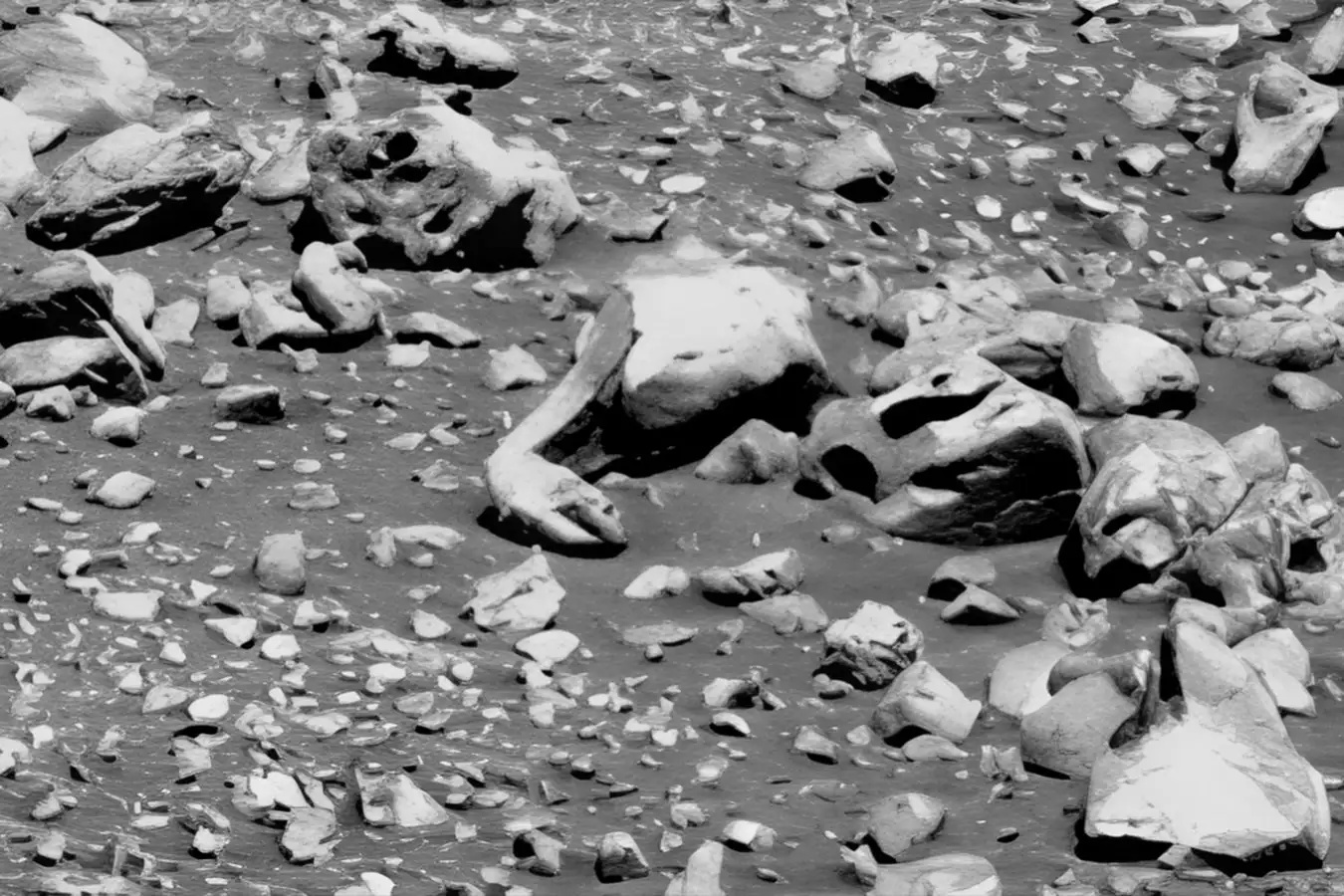
Let’s not spend too much time debunking here what has been debunked, so often and so convincingly, elsewhere. Improve the image resolution, and the Face disappears. Mars’s hexagonal craters are a commonplace of rocky planets, and imply some fluid subsurface (think the patterns porridge makes, boiling in a pan). Lightning bolts cannot leap from planet to planet. The presence of the xenon 129 isotope in the Martian atmosphere will imply ancient nuclear conflict only if you ignore the well-understood process by which a now-extinct isotope, iodine 129, would have decayed to xenon 129 in Mars’s rapidly cooling and ever-more inert and boring lithosphere. Is that a rock? Yes. Even the one that looks like a bone? Yes. Even the one that looks like a tumble-dryer? For the love of God, yes — have you not seen rocks?

Ron Levin, son of Gilbert Levin, the engineer who cooked up Viking’s Labeled Release experiment, wonders why NASA ignored two clear positive results and scotched its early claim that there was microbial life on Mars. Well, NASA didn’t ignore the results. Neither did it ignore the results of Viking’s Gas Chromatograph-Mass Spectrometer experiment, which found no evidence of any organic molecules in the Martian soil. Reconciling these results gave us our current understanding of Martian soil chemistry. By that measure, the Labeled Release experiment was a success: why be resentful?

More poignant, though no more convincing, are the idees fixees of Richard Brice Hoover (born 1943) who headed astrobiology research at NASA’s Marshall Space Flight Center until his retirement in 2011 and did more than most to establish the existence of extremophile life on Earth.

He’s convinced he’s found diatoms and other microfossils in meteorites, and such is his enthusiasm, he never quite gets around to explaining why each of these objects is lying on the top of the rock sample, instead of being embedded in its matrix.

John Brandenburg (born 1953) is a pretty well-regarded plasma scientist, if you can get him off the subject of Martian nuclear war. And what about Mark Carlotto, who’s spent forty years seeing civilisational remains on Mars where everyone else sees rocks? Drag him down to earth, and he’s a capable archaeologist, who really has traced the lines of a forgotten colonial settlement in the middle of Cape Ann – an island community north of Boston.

After the final Apollo moon landing in 1972, the initial excitement of the Space Race began to wane. The images the Viking orbiters sent back promised the next great discovery. Their blurry amalgams of groundbreaking yet ambiguous data were the perfect growth medium for fringe ideas, especially in the United States, where the Vietnam War and the Watergate scandal encouraged scepticism and paranoia.

Dobbs’s flashy retread of tall Martian tales thinks it’s about what happened 3.7 billion years ago, that turned a wet, warm planet into a dustbowl. For me, it’s much more about what happened to some squirrely enthusiasts, glued to monitors and magazines in 1972. Let’s lay our scorn aside a moment and look this generation in the eye. Fond hopes will not trip up fine minds in quite this way again.

“Look at me, top of the leader board!”

Reading Paul Mullen’s Running Amok for the Telegraph, 27 September 2025

Paul Mullen has spent years trying to understand the internal world of the lone mass killer: the sort of person who draws their weapon in a school, on a factory floor, or at a supermarket. In this pursuit, says Mullen – a forensic psychiatrist – we should remember, and admit, that everyone has the odd unpleasant impulse from time to time: it’s part of being human. So, he writes, when discussing the most sickening criminals, we mustn’t “endow perfectly normal mental mechanisms with a pathological, sinister significance”.

For example, many of us feel undervalued. Many of us feel in possession of skills and attributes that, in a better world, would surely bring us recognition. Who among us has not looked in the mirror and met a creature consumed by resentment or depression? Life can be crushing, and as Mullen says, “disappointed, egotistical, isolated and rigid men are ten-a-penny.” Pushed to the edge, they’re much more likely to put an end to themselves than go out in a blaze of vicious “glory”. (The male suicide rate in the UK last year was 17.4 deaths per 100,000 people, vastly larger than the rate of male deaths by homicide.)

Mullen is best known for his research into the link between common-or-garden jealousy and the obsessional, sometimes homicidal, behaviour of stalkers. He takes a similar tack in Running Amok, a devastating compendium of mass killings, arranged by locale and severity. Many lone mass killers, we learn, are persistent whiners – “querulants” is Mullen’s term-of-art – which led me to wonder what our burgeoning culture of complaint is doing to stoke their fires. From those who self-righteously pursue their grievances to others who seem to live fantasies of battling persecution, you wonder how thin the cognitive dividing-line can safely grow. And yet: whether or not the world is filling up with narcissistic whiners, most of them don’t turn to slaughter. So what leads a handful to make that change? Or, to put it another way, what actuates them even more than what, in truth, are the perfectly common means (guns, vehicles, knives), and motive (the desire for “a semblance of power and significance”)?

Mullen, who has met a wide range of criminals across his professional career, and was the first non-military defence expert to gain access to the detention centre at Guantanamo Bay, points the finger at the availability of an incident the would-be killer can emulate: what Mullen calls a “social script”. In his experience, mass killers are invariably fixated on reports of previous massacres; also on their fictional depiction. Rambo is a fine movie, intelligently written, but there’s a reason the DVD keeps turning up on the shelves of such people.

As societies change, so do the scripts they make available to the despondent, the despairing, the rejected and the humiliated. In the 1970s and early 1980s, homicidal losers used to fixate on a belief; now they’re more likely to kill in the name of a group. The 2016 Orlando killer Omar Mateen claimed allegiance to both Isis and Hizbullah: a neat trick, given how violently these groups are opposed to each other. In this shift from ideology to tribe, Mullen detects the influence of the internet, with its pseudo-communities of extremists desperate to represent some persecuted minority.

The other essential characteristic of these scripts is that they are self-perpetuating. Killers inspire killers. It’s why Mullen won’t mention the killers he’s writing about by name, a tactic that gives the reader the initial impression – quickly dispelled – that the author is only marginally acquainted with his subject matter. On the contrary, Mullen anatomises, with skill and a certain amount of garrulousness, what seems a desperately intractable problem, noting in particular the inflammatory influence of a predominantly on-line incel culture, the depredations of the attention economy, and the addictiveness of certain videogames. The violence or otherwise of these games is not at issue: much more important is their ability to offer the pathologically lonely a semblance of social validation: “Look at me, top of the leader board!” Internet tribalisms of all sorts service the lone killer’s need to belong — and not just to belong, but to crawl to the top of some specious hierarchy. “I’ve got the record, haven’t I?” was practically the first question Martin Bryant asked after shooting and killing 35 people and injuring 23 others in the Tasmanian tourist town of Port Arthur in 1996.

So much for sociology. Mullen would sooner engage with the extreme inner worlds of lone mass killers than explain them away with platitudes. Whatever maddened these people in the first place (and let’s face it, some people are just born miserable), by the time mass homicide seems like a solution to their problems, they are, by any common definition of the term, mad, and should be treated as such.

This is where Mullen turns to discuss, of all people, Queen Victoria. Across her long reign, she was the victim of eight assassination attempts. By the time she died, entirely peacefully, the Metropolitan Police had learned that the most effective strategy for avoiding or mitigating attacks on a permanently public target was, as far as possible, to dampen down publicity. Ever since, would-be regicides have been arrested without fanfare, and often ushered into psychiatric treatment. Thus, within the bounds of law, a security issue has been turned into a public-health one.

Mullen would like to see potential lone mass killers spotted and treated in much the same way. He proposes a Threat Assessment and Response Centre (targeted on random killings) modelled on the Met’s Fixated Threat Assessment Centre, which handles the security of known targets. Faced with a credible threat, the Centre should be given access to the suspect’s police and medical records and their internet history. Why? Because identification is ninety per cent of the battle. Treatment, by comparison, is startingly simple: obsessives on the path to atrocity are, in Mullen’s experience, remarkably cooperative and frank with those who’ve managed to stop them.

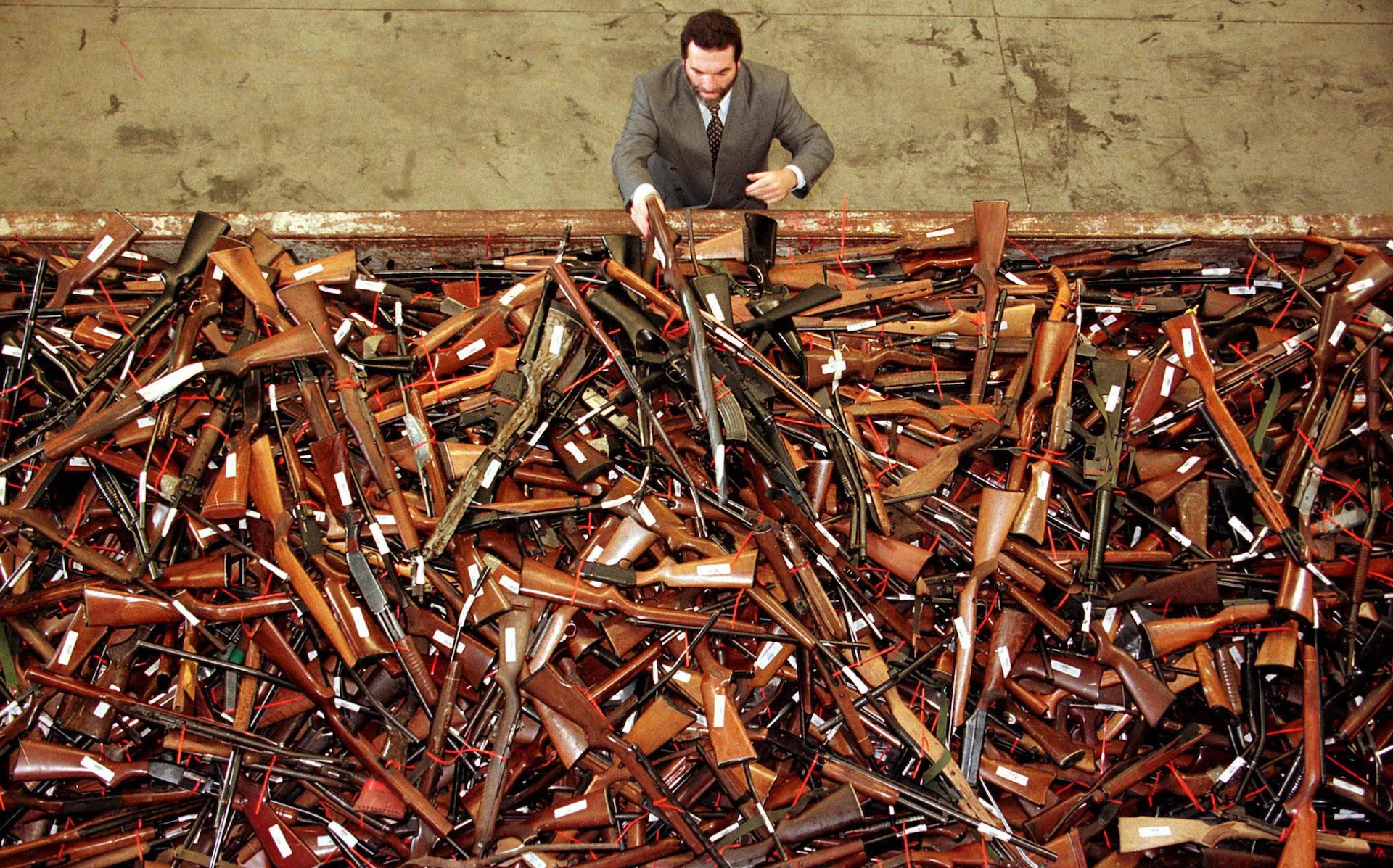
At the time of writing, there have been just over 300 mass shootings in America so far, and while gun-control laws may have preserved Britain and other Western countries from that specific plague, a spate of vehicle ramming attacks in Nice, Berlin, London, Barcelona, Stockholm and other European cities have left us, and our security services, in a state of hypervigilance.

So can we do anything? Mullen wants us to overcome our reticence and take seriously the threats made by miserable obsessives. False alarms will be raised, but psychologists aren’t witch-finders, Mullen assures us — in fact much of his time is spent avoiding the false attribution of madness in the people he meets.

I fear public awareness won’t do much good, however. Now that civic society has declared war on nuance and arrests people (or, Graham Linehan, anyway) for jokes, how can any of us be expected to hear the signal over the noise?

Dig another hole

Reading The Secret History of Gold by Dominic Frisby for the Telegraph, 22 August 2025

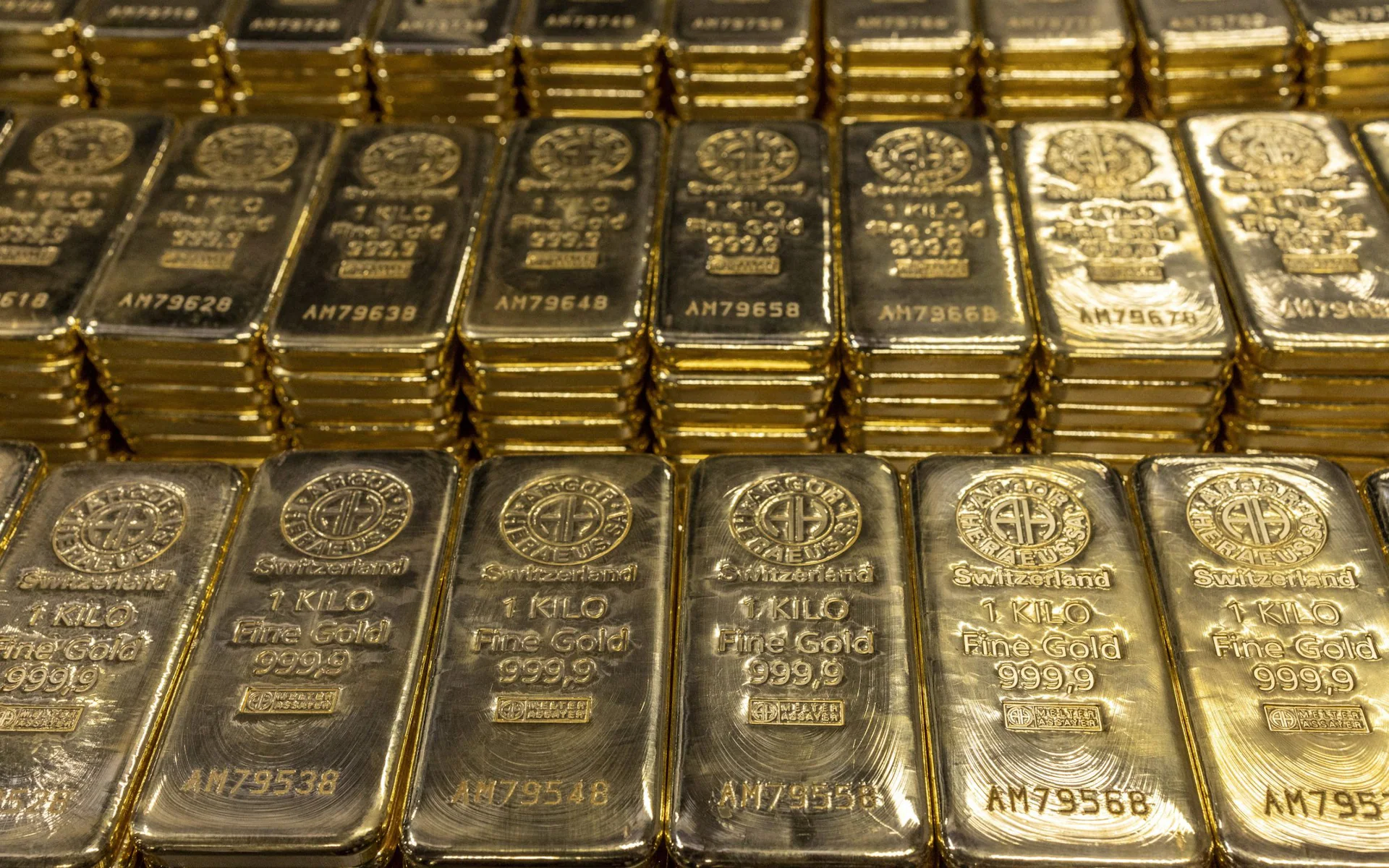
We used to sift this soft, off-colour metal out of the beds of streams. Then, once the streams ran out of the stuff, we dug it out of the ground. These days, lest the smallest grain elude us, we gather the stuff by leaching gold out of the ore and into a solution of cyanide. Then we precipitate it back into a solid, melt it down and, says American investor Warren Buffet rather wryly, “dig another hole, bury it again and pay people to stand around guarding it. It has no utility. Anyone watching from Mars would be scratching their head.”

Well, not quite. Gold is useful. It’s a gift to artists: soft enough to work without fire (which is why it was the first metal we ever harnessed), and chemically so stable that it never tarnishes. No matter what we make of the stuff, though, sooner or later, as renaissance goldsmith Benvenuto Cellini and countless anonymous Inca artists will attest, someone else may come along and melt it down. “Gold may last,” says Dominic Frisby – a curious chap, part financial journalist, part stand-up comedian – “but art made from gold rarely does.”

This is Frisby’s real subject in his affable, opinionated new book, The Secret History of Gold: gold is fungible. An ounce of gold is equal in value to every other ounce of gold. Since it doesn’t corrode, rust, or tarnish, and since it resists most common acids. we can melted and recast and melt it again, and still end up with an ounce of gold. This makes the element about as honest a medium of exchange as the physical world has to offer – a point that besotted the Spanish conquistadors who melted down enough South American artwork into bullion to destroy their own empire’s balance of payments, and has been lost on few serious politicians since. “We have gold,” said Herbert Hoover in 1933, “because we cannot trust governments.”

Frisby himself is no fan of the State. His 2013 book Life After the State was subtitled “Why We Don’t Need Government”. His 2019 book about tax was called Daylight Robbery. Frisby’s is a sentimental conservatism, weaponised on stage in ditties such as the Brexit victory song “Seventeen Million F—-Offs” (a treasurable joy, whatever your politics), and reasoned out in books that offer up cogent entertainment, even if they don’t always convince.

The Secret History of Gold is another addition to that trend. As a history, his tales – whether topical, historical or mythological – are well-turned, comprehensive and occasionally surprising. King Midas’s “touch”, we learn, was a just-so story cooked up to explain the unreal amounts of gold discovered in the bed of the river Pactolus. Alexander the Great created the world’s first standardised currency by adopting consistent weights for gold and silver coins across his territories. A latter-day alchemist called Heinz Kurschildgen was prosecuted for fraud in 1922, after convincing several investors that he could turn base metal into gold; later, he convinced Heinrich Himmler that he could make petrol out of water too.
Intellectual property is now so frictionless that the business of “gathering tales” is something any fool can do by pressing a key. Frisby is perfectly entitled to rehash many of the tales from Timothy Green’s 2007 The Ages of Gold, since he recognises that debt in his end-notes. This isn’t inherently a problem – how else but by reading do books get made? – but the internet has made us all potentially that erudite. What matters, then, with books such as Frisby’s, is less how much you know than how much fun you have with what you’ve assimilated. Thankfully, Frisby entertains here, impressively and convincingly so. It’s just that it seems a bit silly for Frisby and his publishers to call a book such as this a “secret history”, when it’s simply combining accessible materials into a compelling new weave.
Each story in that weave, at least, does inform Frisby’s argument and obsession – that the world (or, failing the that, Britain) might return to a gold standard. This is the business of tying a country’s currency to a fixed quantity of gold, so that its paper money can in theory be exchanged for the metal. Pegging currencies to the value of gold certainly makes life simple, or at least, it seems to, if you don’t pay too much attention to the prospecting and the mining, the pillaging, the counterfeiting and the fraud. Frisby wouldn’t dream of skirting such a rich source of entertainment, and his tales of German and Japanese gold-hunting during the Second World War are eye-popping. In Merkers salt mine, U.S. troops discovered a Nazi stash including over 100 tons of gold bullion, but General Tomoyuki Yamashita’s treasure horde, meant for Japan’s post-war rebuilding, remains untraced and untracerable.
It’s true that the gold standard stops governments from recklessly printing money and inflating the economy. And this, Frisby argues, is exactly what has happened, pretty much everywhere, again and again. Crippled by the costs of the first world war and the Great Depression, Britain was first to abandon the gold standard in 1931. But 1971 was when the rot really set in. Saddled with rising inflation, increasing trade deficits and the cost of the Vietnam War, Richard Nixon’s US abandoned the standard and took the rest of the world with it down the path of perdition; government after government has since then repeatedly devalued their currency on the world’s markets. Why else would houses cost 70 times more now than when I was born in 1965?
Frisby’s proposed cure is for the world to adopt cryptocurrency. Despite not being a material entity, like gold, a bitcoin is pure money – a bearer asset. When I hand you a bitcoin, its value is, as Frisby explains, immediately transferred from me to you. What’s not to like about digital gold? Well, for starters, manufacturing these magic numbers – mining these bitcoins – requires a lot of IT infrastructure and no small amount of energy, so it puts production in the hands of just a few powerful nations, rather as the gold standard put production in the hands of just a few gold-rich territories.
Frisby’s arguments for pegging currencies to a digital standard might also carry more weight if he were a little more realistic with himself, and with us, about why we left the gold one. By abandoning gold for a currency backed by empty promises – a fiat currency system – governments no longer have to manage the amount of gold they have. This means they can concentrate on stabilising prices, by controlling interest rates. They might not do a brilliant job of it, but it’s what made the difference between how we experienced the Wall Street Crash of 1929 and the much bigger but infinitely less ruinous crash of 2008.
Until cryptocurrency has caught up, Frisby is inclined to pin all our current economic woes on Nixon’s 1971 decision to abandon the gold standard. As an economic thesis, that’s not even wrong, just hopelessly insufficient. It fails to acknowledge the benefits of free trade that the fiat system has enabled, despite its difficulties, and leaves us wondering just how it is that since 1971, extreme poverty and infant mortality have dropped by more than two-thirds worldwide, while the number of children in primary school has grown from 2.3 million to over 700 million.
But Frisby is an entertainer, and the more he entertains, the more he’s likely to convince. He didn’t really need to lumber his book with the whole “secret history” shtick, and his yarns, ripping though they are, sometimes just get in the way. At its best, this book sets Frisby up as a colourful and sly adversary to contemporary financial and political pieties and sometimes – I would humbly suggest – to common sense. But even at his most eccentric, in his enthusiasm and wit, he’s a worthy adversary. I’m not sure, despite this book’s flaws, that one could really ask for more.


This isn’t High Noon

Reading Sheepdogs by Elliot Ackerman for The Telegraph, 18 August 2025

Hey! It looks like you are trying to shoot someone at point-blank range with a small 9mm pistol. Would you like help?

If you are going to kill someone with a 9mm pistol, it is very important that you stare at the ground as you make your approach. Next, raise your head until you are focused on your target’s centre mass. Think heart and organs. Avoid their eyes and — no, don’t draw, this isn’t High Noon — have the gun in your hand in your pocket, and shoot through the fabric of your suit. Now go and rehearse, and remember: practice makes perfect!

Elliot Ackerman knows something about skill acquisition, task analysis and work breakdown structure. He also knows about the mechanics of a SIG Sauer P938 micro-compact single-action concealed carry. In a crisis, though, hardware will play second-fiddle to the hours of practice. Sheepdogs is a bright and breezy thriller about prepared paramilitary types who know what they’re doing.

Ackerman’s background is such, even a confection like Sheepdogs begs to be read autobiographically. He served five tours of duty in Iraq and Afghanistan. He received the Silver Star, the Bronze Star for Valor, and the Purple Heart. He was also, for a little while, attached to the Ground Branch of the CIA’s Special Activities Division, and he has a whole lot of fun with that institution here, as “Uncle Tony”, a Division spook obsessed with Hyatt reward points, scrabbles about the globe looking for ways to pay the wages of off-the-books armies everywhere from Iraq to Somalia, Yemen to Ukraine.

Uncle Tony looks to have inspired the mess in which our heroes are here embroiled. Cheese (as in “the big cheese”, the most versatile pilot Afghanistan’s military ever produced, now working in a filling station) and former Marine Raider Skwerl (think “squirrel” — Marines can’t spell for shit — financially and reputationally ruined for whistleblowing on an intelligence FUBAR) are being paid to steal — sorry, repossess — that most reliable of thriller macguffins, a private jet.

But the handover in Marseille goes badly wrong, the jet’s owners seem to be stealing it from themselves, and Skwerl and Cheese soon find themselves out of the loop, out of pocket and decidedly out of luck, pursued back and forth across the Atlantic by a remarkably well-connected former Afghan security guard who’s out to avenge, well, something…

Ackerman has a lot of fun with that private plane, a Bombardier Challenger 600 that loses an aileron (a control flap) in a collision with a golf cart, and not long after has its leather and mahogany interior torn out by a famished grizzly bear. The business of hiding the fixing the plane brings in a couple of well-drawn side characters, the survivalist Just Shane and Ephraim, an excommunicated Amish handyman who whittles a replacement aileron out of wood (not as daft as it sounds). Cheese’s better half Fareeda (four months pregnant) and Skwerl’s much more frightening half Sinaed (a professional dominatrix) round out a cast just kooky and diverse enough — and small enough — to tick every box at Apple TV, who’ve paid seven figures to develop Sheepdogs as a series.

Announcements of the novel’s bright televisual future make it slightly tricky to review, since what makes perfect sense for the IP doesn’t necessarily play well on the page. Ackerman is determined not to create any monsters here; he’s much more interested in telling — in the gentlest manner imaginable — broader truths about modern warfare, its commercial imperatives and human toll.

After dozing through tosh like Citadel and The Night Agent, we’ll surely lap up a TV thriller created by someone who knows guns, and better still, understands the men who wield them. That said, I can’t but deplore a literary thriller that leaves all my favourite characters standing, and not just standing, chatting, and not just chatting, understanding each other.

Well, you don’t make an omelette without cracking eggs, I suppose. I can remember when, in 1987, a fine literary writer called James Lee Burke wrote a detective novel about Dave Robicheaux. I adored Burke’s early books, but nearly forty years and over two dozen outings later, I’m hardly going to sit here and say that palling up with Dave was a backward move, now, am I?

Besides, Ackerman’s literary career has been sliding about all over the place, from brilliant memoirs of combat in Afghanistan (and don’t get him started about that catastrophic US withdrawal in August 2021) to best-selling geopolitical thrillers with James Stavridis, a retired US admiral, to clotted oddities like 2023’s Halcyon, a family drama set in an alternate Gore-led America that has cured death. The thriller genre has its limitations, but one of the very best things it can do is give writers a point of focus, who would otherwise go off like a box of firecrackers.

The trouble with Sheepdogs — a thriller that lacks excitement, a comedy without much in the way of humour, and a story about the wages of war that eludes depth — is that it shows its writer still shuffling up to the starting line and sucking on the water bottle. I know I shouldn’t second-guess Ackerman’s intentions. But I hope there will be sequels, and that Sheepdogs becomes a long project for him. Keeping up with the small screen will do him good. Remember: practice makes perfect!